Having worked at both Greater Manchester Combined Authority and now at SP Electricity North West (SP ENW), I’ve seen how successful places are built through strong partnership between the public and private sectors.
Delivering sustainable growth, attracting investment and maximising the opportunities of the energy transition cannot be achieved in silos. It takes trust, patience and long-term collaboration to turn shared ambitions into meaningful outcomes.
Greater Manchester Combined Authority (GMCA) oversees a city-region that continues to outperform the wider UK economy, attracting investment, creating jobs and driving innovation in the transition to a greener economy. Through our partnership with GMCA and engagement via the Strategic Infrastructure Board, we work together to align long-term network investment with the city-regions priorities for housing, regeneration, transport and economic growth. By sharing insight, evidence and future plans, we’re collectively able to make better informed decisions that support growth and deliver benefits for the communities we serve.
Enabling good growth through infrastructure investment & community support
A resilient and flexibile electricity system is a key enabler to future economic growth. Whether it’s enabling the development of new homes, commercial developments, transport electrification or supporting regeneration projects, network capacity must keep at pace with Greater Manchester’s ambitions.
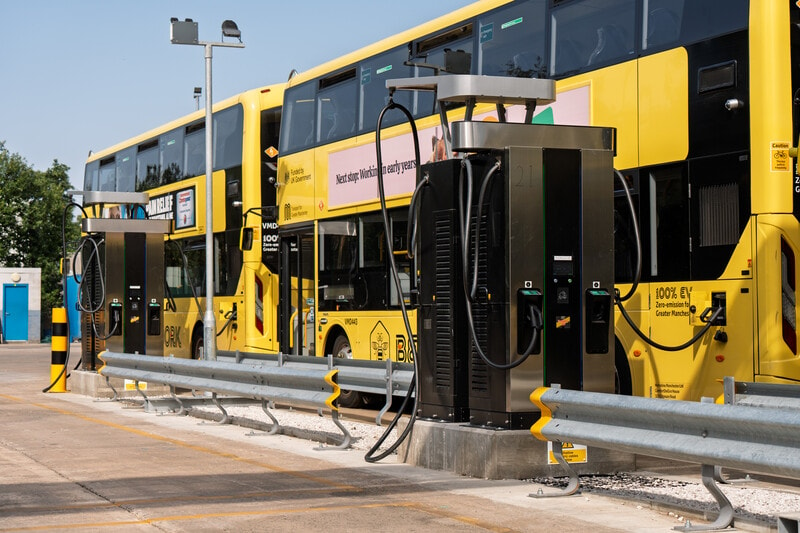
A great example of our coordinated decision-making both accelerating development and delivering better outcomes for the communities we serve is the city-region’s Bee Network.
By working closely with local partners and sharing long-term plans, we’re helping to identify future infrastructure requirements early, reduce barriers to development and ensure investment is targeted where it can deliver the most value for people and place.
Plus, it’s also part of our Distribution System Operation (DSO) strategy to ensure that as we move towards an electrified future, everyone has fair and equal access to the cost-savings and benefits this transition creates.
By supporting Greater Manchester’s Environment Plan we’re working towards removing barriers to participation and ensuring local priorities and community needs are reflected in future energy planning and delivery. This includes enabling the uptake of low carbon technologies such as solar panels, electric vehicles and heat pumps which can help to reduce energy costs, support local energy resilience and contribute to healthier environments.
Planning for places
We believe the best decisions are made when our plans are informed by both technical expertise and a strong understanding of the places and communities they're designed to support.
Embracing the local-viewpoint has shaped our partnership with the GMCA, including our support for the UK’s first city-region wide Local Area Energy Plans, ensuring that network planning reflects the distinct opportunities and challenges facing Greater Manchester’s communities.
As the energy system evolves, we continue to build on this approach through our collaborative work on the National Energy System Operator’s Regional Energy Strategic Plan, where we have worked closely to ensure that Greater Manchester’s priorities are reflected in emerging plans and processes.
By combining local insight with network data and long-term forecasting, we can make better-informed investment decisions that support local ambitions, unlock growth opportunities and create more resilient places for people to live and work.
Our successes in Greater Manchester show the value of strong strategic partnerships.
As devolution deepens across the North West and regional powers continue to grow, we look forward to building on our established relationships with local authorities across the North West, ensuring future network investment and infrastructure delivery continues to reflect local priorities and ambitions.